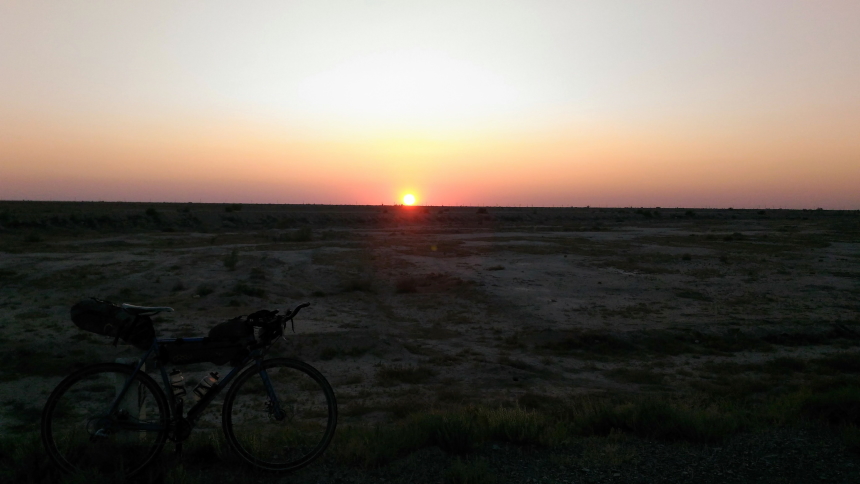
Doubt, desert & dust // Part II

Finally it’s the heat that gets me out of my sleeping bag. I don’t wanna do it; I don’t want to deal with the broken pavement that lies 50m away. But I have to. I’m packing up and eating the last cookies I had left over from yesterday, when I see what looks to be a motorbike going towards the border. I freeze instantly and focus on the oncoming vehicle. As it gets closer, there can be no doubt: it’s a touring motorbike carrying two people. I start running towards the road, the driver sees me and stops. It’s a couple from Spain riding back to Europe. 

  • Hi there! Do you have any uzbek money? I badly need to change 20$.
  • I’m sorry we’re out. This is all we have left; says the man while handing me a 20.000 som bill. The equivalent of 2$. 
  • Thanks a lot. It’s better than nothing. Would you happen to have any water?
  • Just a little bit. We can maybe fill up half of one of your bottles.
  • I’ll take it. Thanks again. What can you tell me about the road? Does it get better?
  • Yeah the road is gonna get better for you in about 20km. How is it going to Beyneu?
  • You’re not gonna like it. But after Beyneu, it’s great. 

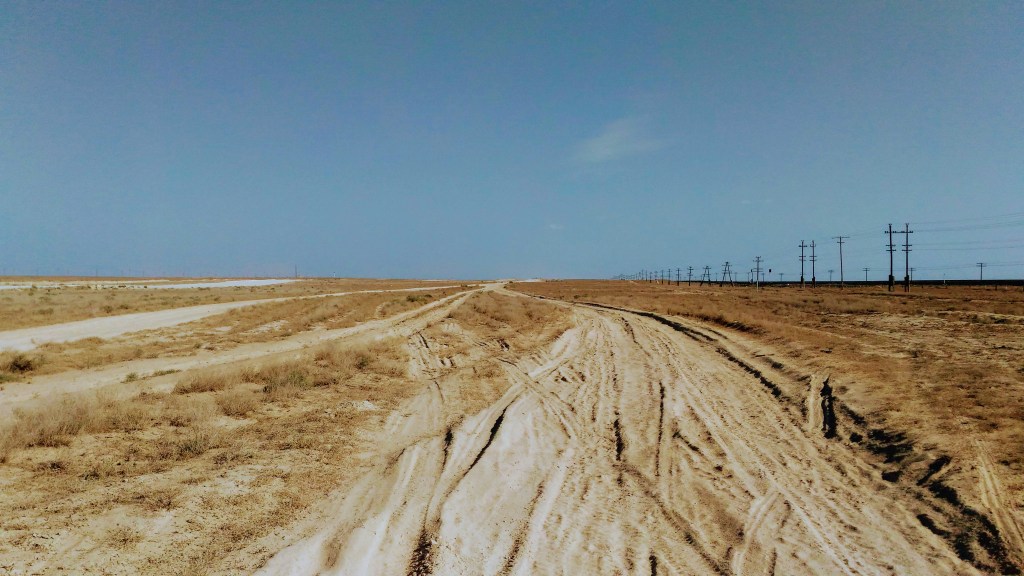
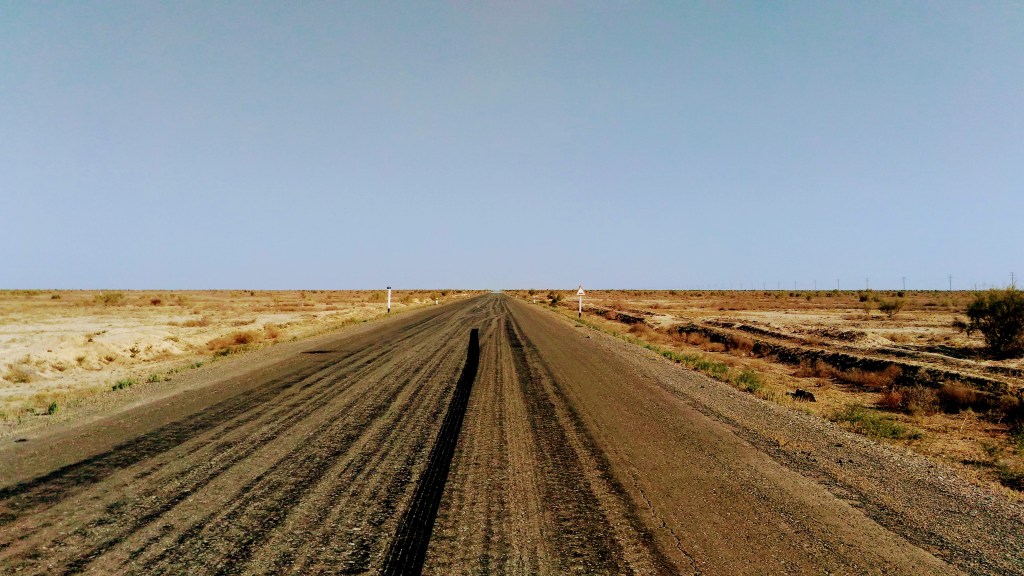
We chat a bit more, I thank them again, we shake hands and go our separate ways. Well, this is just what I needed: a little water, a little money, and a big boost to the morale. I set out with renewed confidence. It’s 9.30 and it’s already pretty hot. There’s not much to see in the desert. The road is just a long, flat, straight line where you maybe spot a car every hour or so. There’s also the occasional wild camel. But that’s pretty much it. No turns, no trees, absolutely no changes in the landscape whatsoever.

And it’s hot. It’s too hot to hope riding 100km with half a bottle of water. I want to drink it all, but I only allow myself a sip every fifteen minutes or so. My mouth feels like paper. My mouth feels as dry as the desert. I watched every bottle lying on the side of the road, hoping to find a full one. Now more than ever, I regret the hours spent in my sleeping bag last night. Dumb mistakes are dumb. But mistakes you make knowing they’re nothing but dumb mistakes are even dumber. And very hard to justify. I soon realize it’s not gonna happen; I’m not gonna be able to reach the next shop with what I have left in my bottle. Something needs to happen. And it needs to happen fast.

That’s when I notice what seems to be a cargo truck straight ahead. As I get closer, I get confirmation it’s a big truck stopped on the road. I start sprinting frantically! I have to get to it before it leaves. It’s one of the longest minutes of my life. It’s my chance. If it goes away before I catch it, I may not get another. 

Completely out of breath, I reach the truck and greet the drivers. Russian is the lingua franca in this part of the world and I quickly ask for voda, which, you guessed it, means water. One of the guys goes to a tank that is located underneath the truck somewhere and proceeds to fill up my bottles with lukewarm water. Meanwhile the other guy asks me “Otkuda?” (where are you from?) After answering “Francia”, I’m virtually out of russian vocabulary and the conversation comes to an end. I show them as much gratitude as I can (Spasiba bolchoï) and get back on my bike where I drink some of the water they just gave me. Drinking lukewarm water never feels good, no matter how badly dehydrated you are. But at least, I’m now in a decent enough shape to reach Jasliq. 
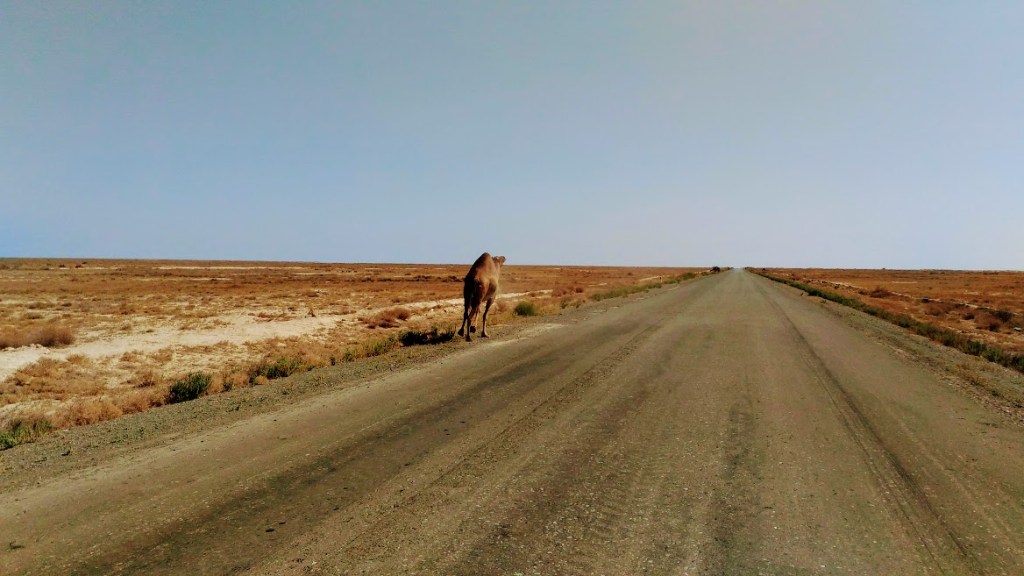
Run little camel, run…

On the map, the dot looks bigger than Karakalpakya. But when I get there, the village turns out to be pretty much the same size. It’s not big enough to have a bank or a hotel. It’s just big enough to have a shop with a fridge. That will do for now. Thanks to my spanish friends, I have enough money to buy either a little food and some water, or a bottle of Pepsi and some water. Thirst is far worse than hunger. Being hungry, I can deal with it. I can forget. Thirst is with you every second and never lets you the opportunity to think of something else. After so many hours spent dreaming of a cold drink, I know downing a bottle of cola is gonna feel much better than eating whatever. So I buy the pepsi. It’s almost frozen, which is perfect. I sit in front of the store slowly sipping the nectar. Kids look at me with their big eyes, wanting to talk to me but not knowing if it’s okay. I don’t mind being left alone. I stare at my phone wondering where I’m finally gonna be able to change money and get some food. The next dot on the map is pretty far and as far as I know it could be another small village deprived of any bank. There’s no way to know. Well, actually, there’s one. And it’s by getting there. So I get back on my bike and get going. 

The rest of the day is just more of the same. This straight, lonely road across the desert, as far as the eye can see. There’s a good chance I did not enjoy myself. I honestly don’t remember. But I often think of this day in the desert. This particular day. And how quiet, big and peaceful this place was. I’m not sure I liked it when I was there. But in retrospect, I’m absolutely fascinated by how empty and remote this land is and I cherish the memory of how pure was the solitude I experienced. 

I keep riding on the road whose surface has greatly improved. Sometimes the pavement completely disappears and I have to ride long stretches on gravel. But that’s okay, it’s still much better than the broken down concrete leading out of Beneyu. Around 20:30 I reach the next dot on the map. My odometer marks 238km, it’s dark and there’s nothing there. 

There’s another dot what looks like 20km away. It’s a long shot since it looks as lonely and small as all the others I’ve seen before. If there’s nothing there, I’ll have no choice but to keep going all the way to Kungrad, approximately 70km away. I don’t know much russian, but I do know “grad” means city. A real one, with banks and hotels and maybe ATM’s. Of course, after 238km on an empty stomach, I’d rather ride 20 than 70km. But that’s not up to me. I keep pedalling while trying not to get my hopes up, as to avoid being disappointed. 

After a bit less than an hour, I reach the dot which was marked Dinur, and I see about two dozens of cargo trucks parked near what looks like a big restaurant. I can hardly believe it. I really expected another tiny village. Not a busy truck stop. I feel like I’ve really hit the jackpot! 

But have I? Sure, they have food and lodging, but do they accept payment in US dollars? They cater to truckers most likely from any of the countries that are located between Turkey and China. So it would make sense to make business in dollars as well as uzbek som. The best way to know is to ask and I do just that. The waiter goes to her boss, she looks at me and nods her head: my money is good. It’s to describe how relieved and elated I am. Before making any other arrangements about spending the night, I sit down and order a plethora of food and drinks. After eating half of it, I’m stuffed. After spending so much time dreaming about this meal, it sure is disappointing. But you can’t let your stomach shrink with 36 hours of fasting and then fill it up like nothing happened. 
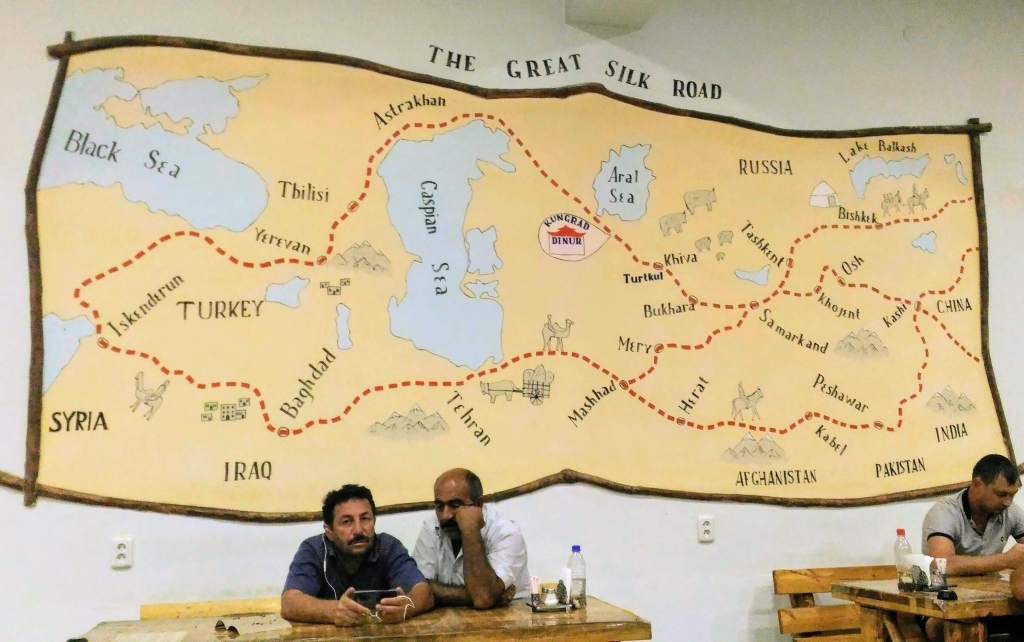
Dinur truck stop

I pay my bill with a crisp 20$ bill for both the food and the room, and then it’s on to a well deserved shower and a good night sleep on a cosy bed. 258km, 10 and a half hours of cycling, no food. It sounds a bit crazy, but when you don’t have any other choice, you just do it. This is the kind of stuff that can happen when you’re a bit too optimistic and you have an aversion to researching the places where you’re going. The funny thing is you’d think I have learned from such an experience. But the truth is, I haven’t and I made the same mistake again several times later in this trip. But it’s okay. Surprises should be part of any long bike tour. Who wants to know everything that’s gonna happen?
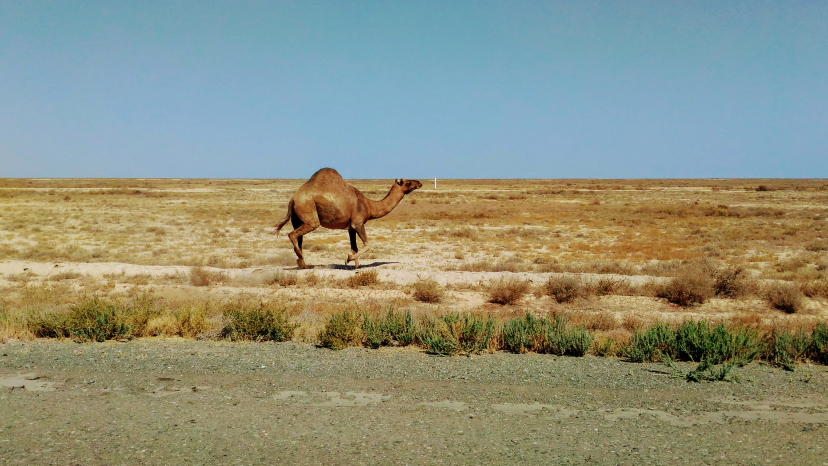
Doubt, desert & dust // Part I

One of the reason I have so many stories to tell is because I hate planning. I love the actual riding but I don’t care for everything that takes place before. Even when on a long trip, I usually plot my route in the morning. And if I have a general idea of where I’m going, I don’t mind changing my plans last minute or even mid-ride. Not only I don’t like researching the places I go, I actually enjoy discovering them with a fresh eye. Most of the time, everything works out fine. But sometimes things prove to be more difficult than I expected. Like that one time in Uzbekistan…

The story I’m about to tell takes place in 2017 as I was riding from my home to China on the famed Silk Road. After a mammoth stage the day before, I wake up late in a cheap run down hotel in a small Kazakh town called Beyneu. I live for travel and adventure, but I have to admit, some of the places I see… well let’s just say I’m really happy I don’t live there. 

After wasting too much time not doing anything in my room, I finally check out and go grab some food. It’s hard to get motivated some days and when I get going it’s way past noon. I have a small plastic bag with a few cookies and caramel nuts nougat bars in there. Enough snacks to carry me out of Kazakhstan into Uzbekistan, some 80km away. Looking at Google maps, I see I have two options to spend the night: Karapalpakya, not far from the border, or Jasliq, some 100km after the crossing. I’m almost out of Kazakh currency, which is exactly what I had planned. I have enough to buy a couple bottles of soda whenever I find a shop, which is important as the temperatures are pretty high in september in the deserts of Central Asia. 

The day before, the ride to Beyneu from Aktau, the main Kazakh port on the Caspian sea, had been fairly straightforward, if kind of boring. A long, wide, freshly paved, flat road across the desert with very few and very little towns. I expect it will be the same all the way to the border. 

It takes me ten minutes to realize I’m wrong. I’m barely out of Beyneu when the nice asphalt turns to an old broken road covered in desert sand. My 35mm wide tires are clearly out of their comfort zone. Now if you’ve never ridden a road that used to be paved and then disappeared, you must understand it’s one of the worst surfaces to ride. On this particular stretch, the superficial asphalt layer is completely gone, and what remains is just a base layer made of some sort of concrete with numerous, long and wide cracks. Cracks that you can’t see due to the sand. For the whole afternoon, it’s just me and a few lorry drivers battling on this unforgiving road. I try to ride as close as possible to the sandy shoulder. The pavement seems to be in better shape but it sometimes completely disappears and I end up riding on nothing but fine sand which, almost every time, means losing my grip and crashing, literally biting the dust. It doesn’t hurt as it’s just soft sand. But the dust ends up accumulating in my shifter which, at some point, stops working. I’m expanding a lot of energy and making very little progress. It’s hot and I’m out of water.

Luckily, soon enough I spot a small town with a shop. I grab a couple of bottles of soda, but when I look for my money, I notice I lost a bill somewhere and I can only afford a single bottle of lemonade. No problem. I’ll find water at the border or in Karalapakya.  

About five hours after leaving Beyneu, I reach the border checkpoint. It’s not the busiest in the world and I had prearranged my visa in Paris, so after fifteen minutes, I’m allowed into Uzbekistan. As soon as I’m in, money changers rush towards me. I checked the rate this morning and they’re clearly trying to scam me. Their offers are so ridiculous, I don’t even try to negotiate. I just leave, telling myself I’ll change money in Karakalpakya or withdraw some cash if there’s an ATM. As I pedal away, I hear a money changer yelling but I don’t pay attention. Maybe I should have.

Now I have spent pretty much all afternoon hoping the road would get better after the border. Five hours at 17km/h is not something I enjoy and I badly need a change. Things look good at first. The road is not covered in sand, which is good. But the improvement is marginal. The layer of asphalt survives here and there, but there’s still too many potholes and cracks to ride at a decent speed. It takes me about an hour to cover the 20km to Karakalpakya. It’s dark when I get there. A bit too dark actually. Where are the lights of the city? I take a gravel path off the main road. I soon find out that the dot I saw on google maps is not a city, nor a town. It’s a tiny village with barely any street lights, and said streets aren’t paved. No shops, no hotel and of course no ATM. This presents me with several problems. The most pressing one being that my water bottles are empty. Riding around the village, I notice a small faucet from which a little water comes out. Is it drinkable? Probably not. I still fill up one of my bottles in case of emergency. Sometimes dubious water is better than no water at all. 

I ride out of Karapalkya and back to the main road. I still have a few cookies for dinner, so it’s not all bad. Then it’s a matter of getting as close as possible to Jasliq, where hopefully I will be able to change money tomorrow. But after battling with this broken road for 6 hours, I’m mentally exhausted. And the surface doesn’t improve, far from it. An hour after leaving the village, I’ve only covered 17km. I can’t take anymore. I need a break. An hour, maybe two. I sit down on the shoulder. I’m hungry; I’m thirsty; I’m tired. I eat my nougats then I wander a bit further away from the road to lie down. Not too long. But I soon get cold so I decide I’m gonna be more comfy in my sleeping bag. And that’s my doom. I fall asleep and every hour I opt out of getting up and choose to spend another hour in the warmth of my bag.

I know it’s a bad idea. Because riding during the day, when temps are high, I will need a lot of water to get to Jasliq. The right thing to do is to ride now, to cover as much distance as possible when it’s nice and cool. But I fail to gather the mental strength necessary to get back on this hellish road. And worse than that; in a semi-sleep state, I drink all the dubious emergency water I had gotten in Karakalpakya.

When the sun gets up, I know it’s more than time to go. Yet I still can’t get up. The way I see it, it’s too late already. No matter what, I’m fucked. Leaving now or in three hours won’t change much. So I might as well keep sleeping. I close my eyes and, for a few hours, my problems go away.

to be continued

Ultra heroes

What I want this blog to be is not only a place where I tell my stories, but also a space where I can reflect on bikepacking, bike touring and ultra cycling. One of the questions I’ve often asked myself about self-supported bike racing is: who are the real heroes? 

In most cultures, it would seem natural to consider that the fastest racers are the heroes. On the other hand, I think the american way would be to crown pretty much everyone. To consider that the midpack and back of the pack have it as hard, if not harder, than the pointy end. This is a bit hard to swallow when you actually belong with the front runners. When you give it your all until there is nothing  left to give. But there might be some truth to it. 

I’ve never been midpack so I can’t testify to what it’s like. I have, however, been slower than I am right now. So what I can do is compare my two Tour Divides. The first one in 2016 and the last one to date in 2019. The race of a rookie vs the race of an experienced ultra-racer.

I can honestly say that in 2016, for most of the race, I was miserable. On day one, I crashed both literally and figuratively and spent the night shivering in my sleeping bag. Day 2 was not that bad, but day 3 was horrendous. After a sleepless night, I spent pretty much all day riding on an empty stomach, with swollen feet, inflamed Achilles and I crashed again. I spent the night of day 4 sleeping in the streets of Butte, Montana and the night of day 5 riding in a snowstorm on Bannack Road, borderline hypothermic. That whole race was just mistake after mistake. Nights spent in the wild without a tent or bivy, getting very little sleep and barely recovering. Then trying to push with whatever energy I could muster. Much more experienced riders than myself would get some quality rest indoors, start out fresh in the morning and catch me mid-day when I was tired and demoralized.

A lot of times I felt mentally broken. Not up to the challenge. 

On day 3, I only made it to Lincoln thanks to Chris Plesko and Gareth Pellas. On day 4, I made it to Helena thanks to Kevin Jacobsen. On day 5, I made it to Lima thanks to Andrew Kulmatiski. On day 7, I made it to Wamsutter thanks to Brian Alder. I’m not talking about actual drafting of course. But what you could consider as emotional drafting. Someone is riding, you ride with him, you chat, it takes your mind off the suffering. Often times it goes both ways. You need your buddy and your buddy is glad you’re here.

I managed to finish in 16 days which isn’t slow but is still two full days slower than the pace I was keeping in 2019. 

Yet I feel my 2019 ride was easier. I had a plan. I had the right bike and the right gear. I had the right mindset. Everyday I was setting goals and reaching them which, you should know, is fairly uncommon on the Tour Divide. 

A couple hours of hike-a-bike on Koko Claims

It was not easy. I hated the last climb in Canada, before Roosville. I had barely recovered from the Italy Divide and my knees were giving me a hard time. Sleep deprivation was hard to deal with. Staying awake on that long straight paved road to Pinedale was almost impossible. That last stretch to Wamsutter deep in the night really beat me up. The sleepless nights were long and the mornings cold. But most of all, that clock was always ticking. Taking five minutes to change my socks made me feel guilty. Checking in for a hotel night was like a formula 1 pit stop. Resupplying more than once a day felt like a rookie mistake. No meal was taken seated at a table. Every minute spent not cycling or sleeping felt like a waste of time. 

I feel this is the biggest difference between the front runners and the other racers. That constant pressure, always being aware that the clock never stops. For days. The race never stops. 

The pain? We probably feel less. The mental challenge? Not as tough when you’re in touch with your goals. You’re energized and you want to keep moving forward. Physically and mentally, it could very well be that the experienced, strong, focused racers at the front have it easier than the midpack who struggles with injuries and challenges never faced before.

But that clock… you have to be at the pointy end to understand how it feels. How much it takes out of you. How much you want it to stop ticking for ten goddamn minutes. But it doesn’t. It never stops ticking. 

It takes a lot of discipline to race fast. It takes a lot of you. A few months after the TD, I went to Peru to race the Inca Divide. I tried to showcase the same focus, to be as disciplined as on the TD. I couldn’t. My body had recovered. But mentally I was still exhausted from spending every minute of every day racing against the clock that never stops. I did well and ended up winning the race. But in no way can my 6 days on the Inca Divide compare to what I was able to achieve on the first 7 days of TD. 

To each his own struggles. The tour divide is hard for every single racer. When I toured the course in 2014, it took me 4 days to reach Eureka and I thought I would never see Antelope Wells. When I heard that some people were able to ride the 2700 miles in fifteen days, I couldn’t believe it. It seemed superhuman. 

Surely the more you do it, the easier it gets. 

Hal Russell 70 years young

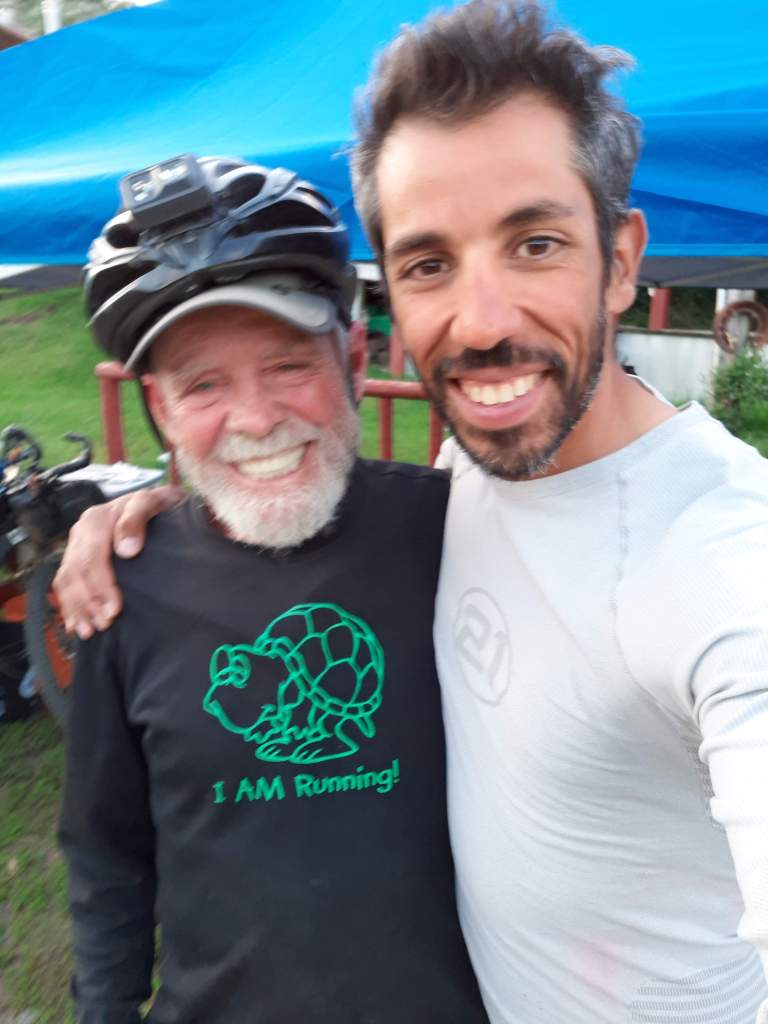
In 2016, when I first heard someone say that it’s as hard for the back of the pack, I was quick to dismiss it. I was too aware of my own pain and my own shortcomings. But now I see that there’s some truth in there. The faster is not necessarily the harder. I’m not gonna say that everyone is a hero, I’m way to French for that kind of stuff. But I think of people like Hal Russell, the veteran of the 2019 field at 70 years of age. If that man is not a hero, who is? I think whoever rode the course, gave it his all, left it all out on the trail, kept going everyday until he just couldn’t do anymore is a hero. Anyone who felt the pain and didn’t give up, pushed to his limits (whatever they are) not to win, not to break a record, not to get kudos on Strava. He did it for the sake of knowing how far he could push, to find his own limit. I respect that.

Escape from China // Part 2

Sitting in front of the gas station with my coffee, I use the wifi to plot my  route. ‘m in a plce called Jinyang, 247km aay from Dexing which I left the day before. This means I should have another 250km before reaching Fuzhou. But looking at the map, I realize the only way to have an itinerary that short is to use the motorway again. Fair enough. I don’t mind.

Jinyang is a big place and it takes quite a bit of time to cycle through it. Once I’m done, my mission is to find a spot to sneak in on the toll road. I’ve gotten better at this and going out an underpass, I spot a nice staircase that takes me all the way to the expressway to Fuzhou. As I’m about to climb over the rail guard, I hear honking. I lift my head up and see a police car. I immediately retreat and climb down the stairs. This is harder than it looks. I’m not sure what to do next. Should I try again? I noticed a tunnel when I was about to climb the rail guard. Which means cameras. What if they see me and send another car? They could be pissed off at the foreigner who got caught once and didn’t care enough not to do it again. I spend a long time hesitating. I have no idea how long the detour will be. It’s still early, maybe I have time to make it even with the detour. It depends on the surface and the profile, as always. Okay I’ll try it. I’d rather not get in trouble with the cops on my last day in China. 

What can I say about that detour? It was nice. Magnificent views of tea plantations. Short steep hills through lush vegetation. Quiet roads. Small villages. One long partially paved, hard climb in the heat of south China. A bit of a hike towards the top. Fraternizing with a local out on his mountain bike for the day. A nice slow day of bike touring. A detour I would have truly enjoyed if I had slept the night before and was in no rush to get somewhere. But all I could think of was “when am I going to get to Fuzhou?” 

Tea plantation

As night is about to fall, my average speed is below 20km/h and I get my first flat. It’s a slow leak so I decide to keep riding till the next town, which is not too far and looks big on the map. I stop every ten minutes or so to get some air in my tire. Once I get to town, I find a small repair shop and leave my bike there as I go get some food. Patching another tube is something I am not willing to do if I don’t have to. With my belly full and my tire fixed, I ride around town looking for an actual bike shop where I could buy a tube but none carries my size. 

It’s dark and I am still far from Fuzhou. I have no idea if I’m gonna make it in time to get a hotel and get some rest before boarding the boat to Taiwan. If the road is flat and nice I might get there soon enough. 

Of course as soon as I get out of town the road turns out to be shitty and there is a ton of climbing. I see the hours of sleep I was counting on being taken away from me one by one. At least the first part of the last stretch to Fuzhou is quiet. It’s slow but I’m by myself. The second part though turns out tu really suck. I find myself on a road that is still crap but also surrounded by trucks. At least it’s flat. Well for a bit. Then as I’m close to reach the end, I have to climb one last big hill. 

Gravel makes cycling nicer but slower too

I finally make it to Fuzhou. It’s late but I manage to grab some food real quick and most importantly, some wifi. I need to find the port where the boat to Taiwan leaves from. And that’s the final blow. Maweï, the suburb where the port is located, is 20km further. It is now 3am and that’s another hour of sleep taken away from me. I ride to Maweï as fast as I can. It’s close to 4am when I start looking for hotels.

Now you have to understand that the vast majority of hotels in China cater only to Chinese people. So finding a place to stay can be a lengthy process as there is no information available about which hotels will accommodate foreigners. I start roaming the streets, entering every hotel I see. After five or six rebutals, I do find one willing to let me a room. The price is rather steep though. Maybe something I would consider paying for a full night, but certainly not for 3 hours. I keep looking. To no avail. It’s 4:30am, in about an hour and a half McDonald’s will open its doors and I will be able to get some coffee. I decide to spend that time in my sleeping bag in the doorway of a public building. Mosquitoes keep me from sleeping but at least there’s an open restroom which allows me to clean myself a bit. 

At 6am I grab a long breakfast at McDonald’s. I only have to get to the ferry and there I will finally get some sleep. At 8am, I show up at the port after much looking around. An old man at the desk tells me the boat won’t sail today due to the weather. Apparently the wind is too strong in the strait. 

“Will the boat sail tomorrow?” 

“Maybe…” 

Now that’s helpful. 

Okay so here I am. Last day on my visa. I am supposed to get out of China or face the consequences. Which can go from a fine to a few days in jail followed by a ten year ban. I’d rather avoid any of it, so I head to the police station hoping they can extend my visa to tomorrow, when “maybe” the ship will sail. For the random traveler, the Chinese police are usually kind and helpful. A lady officer happens to speak a  bit of English which helps a lot. Unfortunately the only alternative they present me with is getting on a fast train to Shenzen and cross the border to Hong-Kong. No thank you. I’d rather get some sleep. Too bad about the overstay.

Miraculously the first hotel I walk in is fine with foreigners and rather cheap. Where was it last night when I needed it? I have no idea. I probably rode past it without seeing it. Not only are they fine with foreigners, they don’t mind an early check-in. And even though it’s only 9am, I get the keys to a room. The best part is, it has no windows, which is perfect if you wanna sleep 20 hours like I intend to. Needless to say going under the covers was pure bliss. 

The next morning I show up at the dock well rested. “Is the boat sailing today?” “No. Bad weather”… Of course. 

Well that sucks but I’m gonna have to fly. I check the nearest airports. A flight from Fuzhou is 300$. A flight from Wenzhou, 200km away from here is 100$. Even if I throw in the cost of the train and the taxi, that is twice as cheap. Alright let’s do that. First I need to pack my bike, otherwise I can’t board the train. But where do I find a bike box? I start riding around the train station, making wider and wider circles. It lasts for about an hour until I find a furniture shop. Great! They give me a box and I’m off to the station. I buy my ticket and start packing. I have 30 minutes to fit my bike into a nondescript cardboard box. That’s tight. But I can make it. I’m an expert at packing my bike last minute. Or at least so I think. Turns out I’m a bit presumptuous and when I show up at the dock the train has left a couple minutes ago. I’ll have to take the next and I’m already on a very tight schedule. I get food and drinks before boarding the train then roam around the station looking for wifi. Just my luck. Can’t find any. Which means I can’t buy that plane ticket. Okay, I’ll figure it out. Time to board the train. Maybe there’ll be wifi on board. 

Of course there is no wifi on board. That would be too convenient. When I get to Wenzhou there is not a lot of time left to make it to the airport. I jump into a taxi and show him the ideogram on my phone. He immediately starts pushing the gas pedal. He’s frantic, insulting anyone who’s stupid enough to be in his way. I obviously do not understand a word he says but by the tone of it, it can’t be nice things. He drives like a madman to the airport and even though it’s a bit scary, I have to say I’m happy when we get there on time.

Now there’s wifi at the airport, but it’s too late to buy the ticket online because the plane leaves in less than an hour! I run across the airport to the ticket counter. “Can I buy a ticket to Taiwan?” Yes. “Can I pay by credit card?” No … I start running in the other direction where the ATM’s are. My first attempt at withdrawing money is unsuccessful. I try a different card. Jackpot! My hand full of money I run back to the ticket counter. There you go, miss. I’m the last one at the check-in. I drop my box and proceed to customs and immigration. 

Achievement unlocked

Now I have a secret weapon in case the officer is too displeased about my overstay. I asked a Chinese speaking friend in Paris to write a little text explaining my situation. I play the honesty card and apologize about my day of overstay while handing my passport. The officer looks at me and frowns. “Okay… But next time, careful.” “Oh for sure officer! For sure! Sorry again!” 

I reach the gate and board the plane. I sit down, elated. I did it. I escaped from China.

https://www.komoot.com/tour/283836045

Escape from China

The story I am about to tell right now is one of my favorites. It takes place at the end of my 2017 silk road trip and starts in a small chinese town called Dexing. After leaving my home in Paris and 3 months spent on the road,  I’m close to reaching the Pacific ocean. I am also close to reaching the end of my visa, which is no joke in this part of the world. You do not overstay a chinese visa. You just don’t. Ever.

So I spend the night in a hotel that doubles as a karaoke bar, and go to bed quite late. After which, I wake up  mid-day, fairly unmotivated. The routine of packing every morning then riding all day long has started wearing me down a long time ago, and I can’t remember my last rest day. 

Somewhere in the middle of China, I got into a pattern where I would end my day of riding far into the evening, then struggle to find a hotel willing to accommodate foreigners, go to bed anywhere between midnight and 3am, and wake up the next day around 10 or 11am. Once that rhythm was set, I found it impossible to get rid of. I needed the sleep too much and did not have the energy to go into race mode and skip breakfast, shower and a bit of social media in the mornings.. This may sound like it is not much but it means that if I wake up at 10am, I won’t hit the road before 11 at best. 

On this day, the 80th of this adventure, I wake up around 11 and give my first pedal stroke at 11:45. It’s definitely not optimal when you have 250km to cover, but it’s the best I can do after more than 15.000km ridden in less than 3 months. If I’m physically in good shape, mentally, I’m exhausted. I have two days to reach Fuzhou where the ferry to Taiwan is waiting. That is not a lot of time considering that there is more or less 500km to cover. If I fail to do it in two days, I will overstay my visa and get in trouble.

I start the day on small quiet roads through tiny villages. It is warm and sunny and I thoroughly enjoy the absence of traffic, something I’ve not been blessed with every day in China. The only problem is small roads mean slower progress. Definitely not what I need. It’s not long before I start hitting gravel. Now that would be nice if I had all the time in the world. Just the kind of road you want when you’re out for 100km. But all I can think of is my average speed and how fast it is dropping right now. Basically if I can average 25kph I’ll be halfway to Fuzhou anywhere between 11pm and midnight. If my speed drops to 22kph, I’ll get there 1h30 later at best. And by “at best”, I mean if I make zero wrong turns and don’t suffer any flats. I’ve had flats pretty much every single day since I entered China, so that’s very optimistic, to say the least. 

I don’t know much about the profile of this stage. Just that there’s no big climb. Actually I was kind of expecting it would be flat. Turns out it’s not. There’s no big climbs but there’s a ton of short ones. My progress is slow. Way slower than expected. Around 21kph. That’s a full 2 more hours of riding than 25kph. Which means I’ll be halfway to Fuzhou at 1am at best. But it seems the best never happens here. As I’m entering a small town, I get my first flat of the day. 

Fixing a flat when you have a spare tube is done fairly fast. But the time of spare tubes is long gone. With at least one flat a day and at most one bike shop every 1000km, I got used to patching my tubes. Now that is time consuming. You have to locate the puncture, rough the tube, apply the cement, wait a little bit then apply the patch. After all this I like to press firmly on the patch and wait a few minutes to inflate the tire just to be sure the patch and tube have bonded. Inflation also takes time, especially if you want to bring 35mm tires to a good pressure with a hand pump. When I’m in a hurry, I can fix a flat in 5 minutes with a spare tube. Using patches takes up to 30 minutes. 

When I’m done fixing the first flat of the day, on the rear wheel, I notice the front has gone flat as well. This is a big blow to my morale. It means I’m going to lose close to a whole hour. Time I sure as hell don’t have. 

A few kids who were playing have stopped to watch me as I repeat the tiresome routine of patching my tube. You’d think that the more you do it, the better you are at it, the faster you go. But nope, that’s not how it works. I just can’t stand it anymore. It’s a chore and I work at a painfully slow pace. 

At this point I stop making any projections regarding my arrival. It’s all too discouraging. I get back on my bike and start riding. At least the roads are small and rather quiet. But if I keep riding here, there is no way I can make up for lost time. The only way for me to be more efficient is to get on the motorway. It’s straight, the surface is great and there’s loads of tunnels to spare me the climbing. It’s not even dangerous as there is a broad shoulder and very little traffic. But of course it is forbidden for bikes to ride on the motorway. I keep riding, looking for a way to get in. Using the toll is obviously not an option. I know I can’t stop before reaching the 250km mark. 

The rest of the day is fairly uneventful, but as night falls I still haven’t found a way to get on the toll road. I feel it’s gonna be easier to sneak in now that it’s dark. Every time I see on my GPS that I’m really close, I try to find a way. Ironically I lose a lot of time doing so. Finally I spot a small gravel path, climb up a hill, fight my way through a thick bush then under a fence and end up on the coveted motorway. Was it worth it timewise? Probably not. I’m definitely gonna be faster but it took so much time exploring the surroundings to sneak in that the whole endeavor appears a bit vain. 

I manage to ride pretty fast for about an hour until an upcoming toll forces me off the road. It’s the middle of the night, I am about to enter a small town and this is when I get my third flat. I’m not even mad or sad. Resignation is what it is. I look at the clock and the odometer and I know I’m gonna have to go ride all through the night. So I just sit and start fixing my flat while the dogs bark in the distance. I take my sweet time. There is no rush now that I know I’m not going to get any sleep. I kind of wonder if the dogs are going to stop barking at some point. Giving up usually means relief. I give up on hitting the 250km mark before sunrise and I’m relieved I don’t have to race against the clock anymore. When I get back on my bike and start rolling, the dogs are still barking. 

Once I know I’m past the toll, I try to sneak back in on the motorway. Again it’s a process of trial and error but I finally succeed. That stretch is busier and a few trucks honk at me. Not for long. After just a few kilometers, a police car comes up to me and escorts me out of the forbidden road. It doesn’t really matter now. I have time, I can ride on small, convoluted, hilly roads. The good news is I actually like night riding. I like sleeping better, but I can pull an all-nighter once in a while. 

As the sun rises, I make it to the outskirts of a town called Jianyang. I pass dozens of workers on their way to their construction site. Most of them on foot. Some on small motorbikes. 

It’s day when I stop in a gas station in town for some breakfast. Instant coffee, cookie, instant noodles and a bag of chips. It’s the beginning of a new day. The beginning of the last stage of a 16.000km trip.

To be continued …

https://www.komoot.com/tour/283858782

The essence of biketouring III

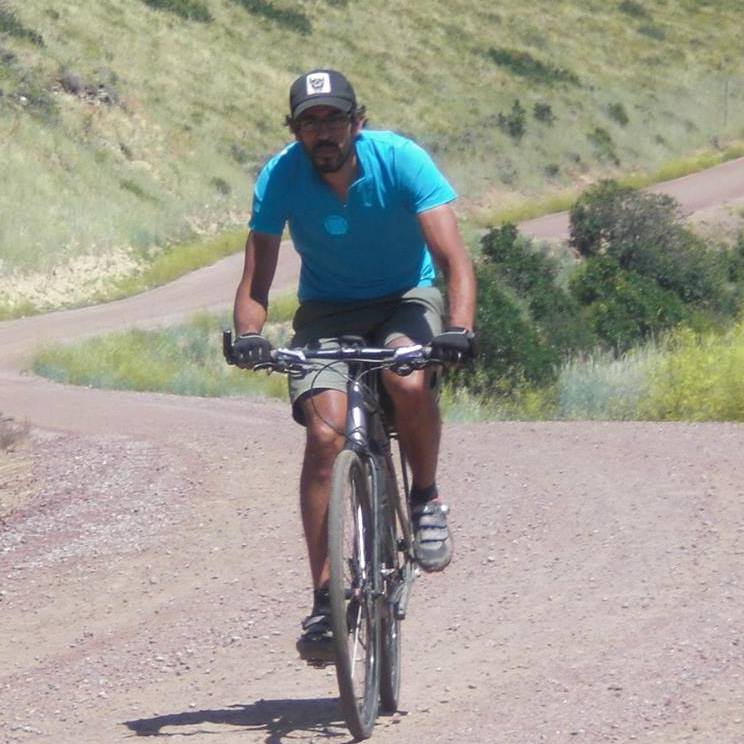
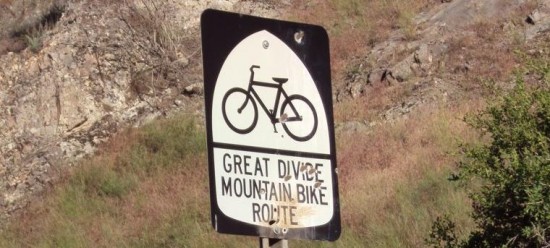
July 13, 2014. While almost everyone is impatiently awaiting the World Cup final, I set off from Banff, Canada (where I landed the day before), with the objective of reaching the Mexican border in 5 weeks at the most. Why 35 days? Simply because after that I have to go back to work. This adventure has a name: the Great Divide Mountain Bike Route – a course designed by Adventure cycling America that runs all the way to Antelope Wells, New Mexico.

53,000m of elevation gain spread over 4,400km of stony, dusty, muddy mountain roads, paths and tracks. All across some of the least populated states in the United States. A dream that I have been chasing for three years and that I am finally about to realize. Now you know me as an ultra-cyclist who specializes in off-road races and has won some of them. But I wasn’t raised with my rubber on the dirt. I’m a city boy and if I had a solid bike touring experience in 2014, with several trips in Asia and Europe, I had virtually no off-road experience. That seems a bit crazy when you’re about to embark for a journey that will be unpaved for 80% of its length, but that’s how it is. Even crazier is the bike I chose for this endeavour. A titanium cross bike with 35c’s tires. I built it with flat bars, disc brakes and a 3×10 shimano SLX groupset, but still. Not the ideal rig for the job. 

It’s around 1p.m. when I leave Banff. In the morning, I had to shuttle on a bus from Calgary where I had spent the night. Then I had to take my bike out of the box, put it back together, get a quick lunch, and a few other things … Hence this late departure.

My goal for today is the small town of Elkford, 170km from here. Knowing what I know now, I realize how foolish I was to think I could ride that far leaving so late. But hey, I’m of the optimistic type, and this will never change.

The first pedal strokes are exhilarating, obviously. A bright sunny summer day, a dirt road in the forest, the sound of my tires rolling on the gravel … I push a good pace and pass a few mountain bikers out for the day. Quite quickly, I arrive at a bridge under construction. Alright … it’s mountain biking so it involves river crossings. No problem. Let’s do this. We laugh about it with a couple of other cyclists who get their feet wet in the freezing cold water. But what I fail to realize at that point is that I am wasting precious time. The reason is that instead of crossing with my shoes on, I decide to take them off, make a first crossing with my stuff and then a second one with the bike.

I then end up on a large gravel road where a few cars proceed to lose me in thick clouds of dust. Whenever I can see, it’s rather pretty out there. I even spot what seems to be a wolf not far from the road. Not too long after that, as I’m riding on a nice single track between the pines, I hear an unpleasant noise and come to a stop. I look at my bike and consider the damage. The chain broke, taking the front derailleur with it and breaking it as well. This is what we call a good start. I shorten the chain, removing the link that failed, and remove my derailleur as well. Off I go. A few kilometers further, fast downhill, pinched inner tube, puncture. More wasted time.

I am not worried yet since I managed to keep a good average. But it’s about to drop dramatically. Soon I find myself having to climb my first pass. Steep gradients, rough surface, the occasional mud patch, not to mention the 8 hours of jet lag I have to deal with … It’s simple: I’m stuck to the ground.

I look at my gps and quickly realize that I won’t get to Elkford until dark.

Lucky for me, I get to the Boulton store before closing time. This lone shop near a campground allows me to resupply. A drink, a sandwich and a brownie in my hands, I leave the store to get back to my bike. I don’t know how far I’ll go but at least I won’t starve. It’s getting colder and before hitting the road, I decide to put on some warmer clothes. I have to be quick as, in a matter of seconds, I’m surrounded by hordes of bloodthirsty mosquitoes. In a semi-panic state, I hop on my bike and flee. 

Now there’s one thing I need to explain before going on. I had a lot to plan for this trip. I bought a frame and built it the way I thought would be best suited for this adventure. I also spent quite a bit of time researching ways to travel as light as possible. Especially regarding my camping gear. I never traveled with camping gear before, staying in dirt cheap hotels instead. But on the GDMBR, there’s not enough hotels and they’re certainly not as cheap as the one in South East Asia. I figured the lightest setup would be a homemade tarp. So I bought some silnylon, rope and a mosquito net. I had an idea in mind but I ended up not having time to finalize it. So I’m basically out there, without a shelter for the night, in the heart of the summer, in this lake region with millions of mosquitoes looking for a meal. 

Every time I see what seems to be a hospitable place where I could maybe spend the night, as soon as I slow down and contemplate the idea of stopping, the little bloodsuckers swarm and start feasting, forcing me to make a run for it. I keep riding, exhausted and a little demoralized, knowing I’m gonna have to continue in the light of my headlamp. Feasible, but not ideal.

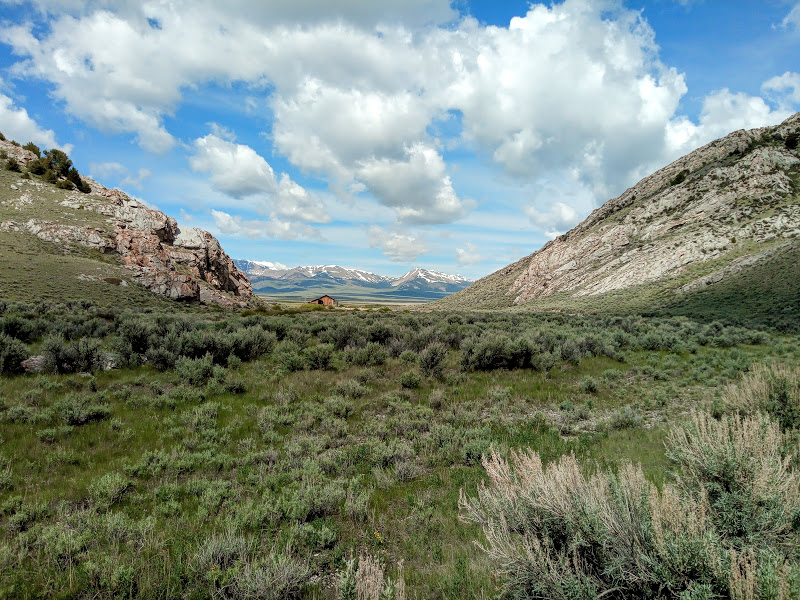
When dusk is upon me and the last bits of daylight give way to darkness, I notice a small wooden house. Both curious and hopeful, I get off my bike and walk to it. I push the door and, to my amazement, it appears it is open. I can hardly believe it! It looks like I just found the perfect shelter to spend my first night on the Great Divide. From what I understand, it’s a self-managed hiker’s refuge of some sort (“user maintained recreation site”) known as Mile 70 cabin. Known by people who do their research before riding, but not by fools like me. There’s no water and no electricity, just two bunk beds, a table, a few chairs. But it’s all I really need. There’s a candle on the table. I light it and settle down. I eat my sandwich, half of my brownie and my banana. It’s perfect here. So remote, quiet and secluded.  It’s such an unexpected end to this day. 

I have never been and never will be a fan of camping. There’s something I love about the comfort of bed, four walls and a roof. I just sleep better, with a real peace of mind. So finding this cabin, it’s a dream for me. 

I remember parts of the ride, and it sure was nice. But the highlight of this day for me, the thing I’ll never forget, that’s the relief I felt when the door opened, and the peace in my own little cabin. This tiny house standing between me and the vast and somehow hostile wilderness. Don’t get me wrong: I love nature. But when darkness comes, I just need a break from it. I need not to worry about animals, insects, rain, cold and whatever can happen out there. This little home in the woods is one of my fondest memories of years of bikepacking. The ride may not have been as hard as the one between Murgab and Sary-Tash. But the uncertainty was far greater and the surprise unforeseeable. In my previous story, the ride was exceptional and the ending as well. Here it’s different. The ride was far from unforgettable, but the getting there now that was something!

The essence of bike touring II

Remember what I was saying about how getting there might hold the key to what makes bike touring so special and addictive? Well here’s the story of a day that should shine a light on what I’m trying to say. It is one of these instances where reaching my destination after much turmoil and uncertainty, gave birth to this very special feeling I never seem to experience outside of the realm of bike touring. This feeling I keep chasing every time I get on my bike for a long ride.

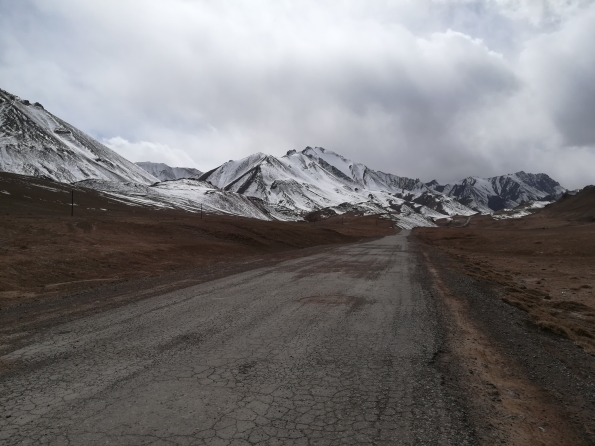
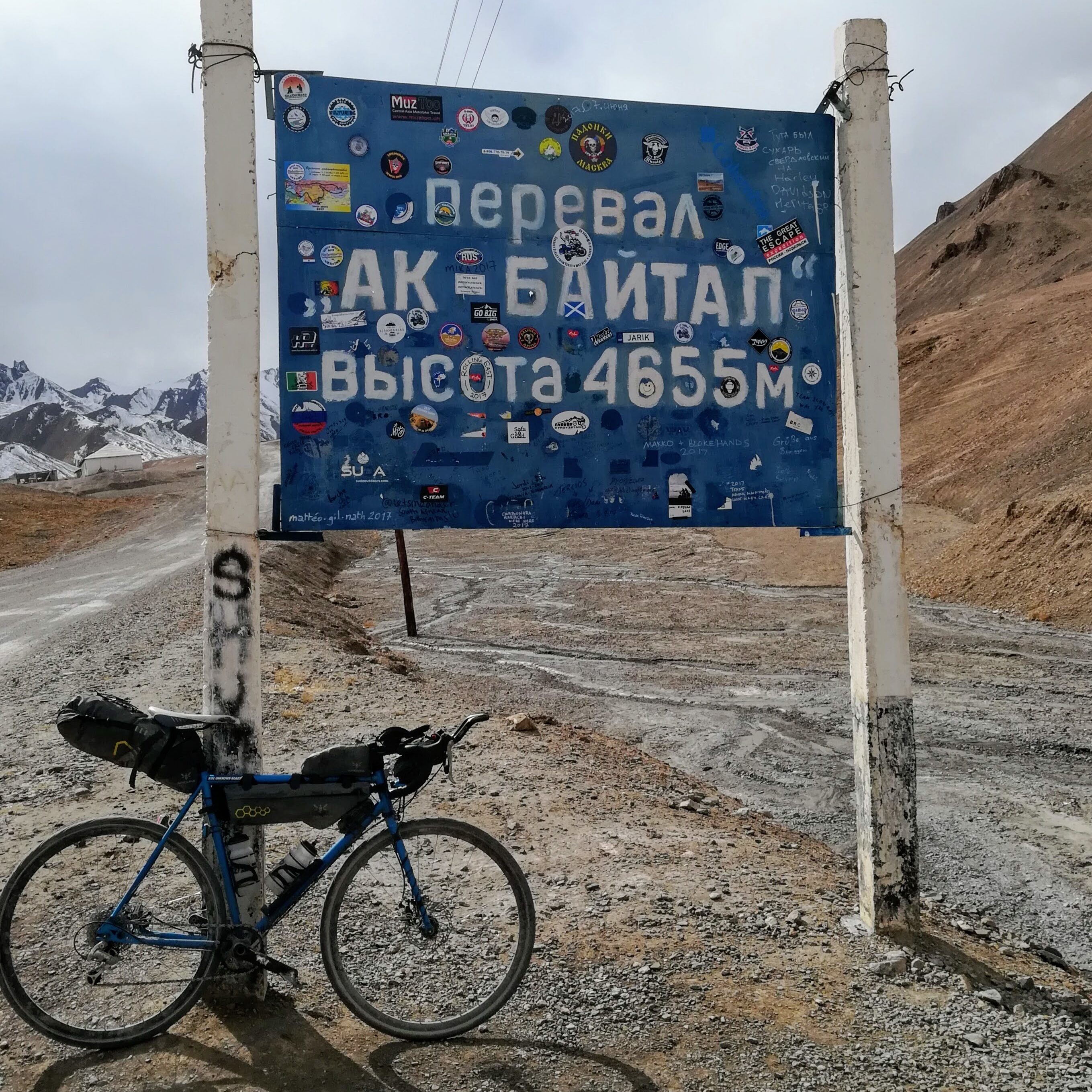
Fall of 2017, in the mountains of the Pamir, a little Tajik village called Murgab. I set out in the morning uncertain of what the day will hold. I usually know where I’m going, but not this time. At less than 150km, the next village, Karakul, is too close. The one after that, on the other side of the Kyrgyz border, Sary-Tash, is too far. I’m gonna have to pick one at some point, but I figure I don’t have to do it right away. Both settlements are on the other side of Ak-baital, a pass that towers at a staggering altitude of 4655m. Progress is slow here, not only because of the lack of oxygen but also due to harsh road conditions and fierce headwinds. It is however one of the most beautiful places I’ve ever seen. 

The start of the day doesn’t see much progress. It’s hard to get anything going with so little oxygen in the air. Actually, even sleeping is made difficult, and I feel I got very little rest last night. The closer I get to Ak-Baital, the stronger the wind gusts. I crawl up the top of the highest point of the second highest paved road in the world. It’s not paved anymore and the headwind claims the hat I had worn all day, everyday for 8000km. I look at it fly away, knowing I’m never gonna see it again. So long, hat. That climb was not even the worst part of the day. Beyond the summit lie some of the worst washboards I ever had to ride. With skinny 35c’s tires, I’m not really equipped for this. It’s beautiful out there, but it’s tough. I hang on, knowing nothing lasts forever. And sure enough, after a while, the road betters and I find myself pushed on a smooth tarmac by the same wind that was holding me back earlier.

Like I expected, by the time I get to Karakul, I still have a fair bit of daylight ahead of me. But definitely not enough to get to Sary-Tash. Will I be able to find food and shelter if I get there late at night? I have no idea. Life is hard in these mountain and not much after sunset, if anything at all. But I feel like I can’t stop now. It seems stupid to waste precious daylight by just sitting in a room or small eatery when I could be riding. So I keep going. Eager to see what lies beyond the next pass.

A few more climbs cause an alarming drop in my average speed and, like so many times before (and so many times after), my optimistic calculations end up down the drain. When I get to the border checkpoint it’s dark out. And it’s been for a while. In a small shack made of clay bricks, three soldiers are playing cards and drinking vodka. They invite me to join them and I politely decline. It’s warm in there thanks to the wood stove, and bitterly cold outside. But I’m a man on a mission. Once the goal is set, there’s no diverging from it. This is just how I am. I take no pride in it as it is something that is out of my control, and sometimes leads to stupid situations. 

Yay washboards!

Stamping my passport doesn’t even take two minutes. It is the fastest, smoothest border crossing I’ve ever experienced and I’m so happy about it that I even give a tip to the soldier. I take off thrilled about the downhill to come. My joy is short lived as I’m welcomed to Kyrgyzstan by a rough gravel road, and any time I’ve gained thanks to very efficient border guards, I’m losing three times as much trying to navigate between boulders and potholes. But soon enough something starts to worry me a bit more. Where is the Kyrgyz border checkpoint? Did I ride past it without noticing? Given what it’s Tajik counterpart looked like, it isn’t that far-fetched. I’ve illegally entered a country only once before but at least I ended up in the safe haven of a Thai brothel. Here, it’s dark, it’s cold and there’s no one. Well actually, at some point, there’s a man with a flashlight. I feel relieved thinking it’s a Kyrgyz soldier and I’m gonna get the coveted stamp. I’m out of luck, it turns out to be a farmer who’s inviting me to stay in his barn. But there’s no stopping before Sary-Tash, even though it’s getting late and the temperature keeps dropping. 

A little later I finally see three actual Kyrgyz soldiers. If I’m an illegal alien here, now is the time to do something about it. Problem is I don’t speak Kyrgyz nor Russian and they don’t speak French nor English. Google translate is of no use as I’ve lost coverage for my Tajik sim card. Well let’s ride on. They didn’t shoot me or send me back to Tajikistan so things are probably okay. 

After about 30 km of no man’s land, I finally get to the Kyrgyz border checkpoint. They’ve spent way more money than the Tajik on their facility and there is actually no way to miss it. As always with borders, getting in is more time consuming than getting out. But at least they don’t check my phone for porn like the Uzbeks did. After roughly 20 minutes, I finally get the coveted stamp and get back on the bike.

I’m fairly close to my goal now but it’s late enough for me to doubt if any place will be open. There’s no 24h motels in the Pamir. There’s not even a real hotel. Just homestays, a few villagers that have a spare room and can accommodate the occasional traveler. The whole village might be asleep. There’s not much to do in these mountains. Not many visitors. No real reason to stay up late. The closer I get, the bigger the doubt. And of course there’s no plan B. Given the altitude, the temperature is gonna keep dropping, and will probably reach -15°C. Something my sleeping bag can’t handle.

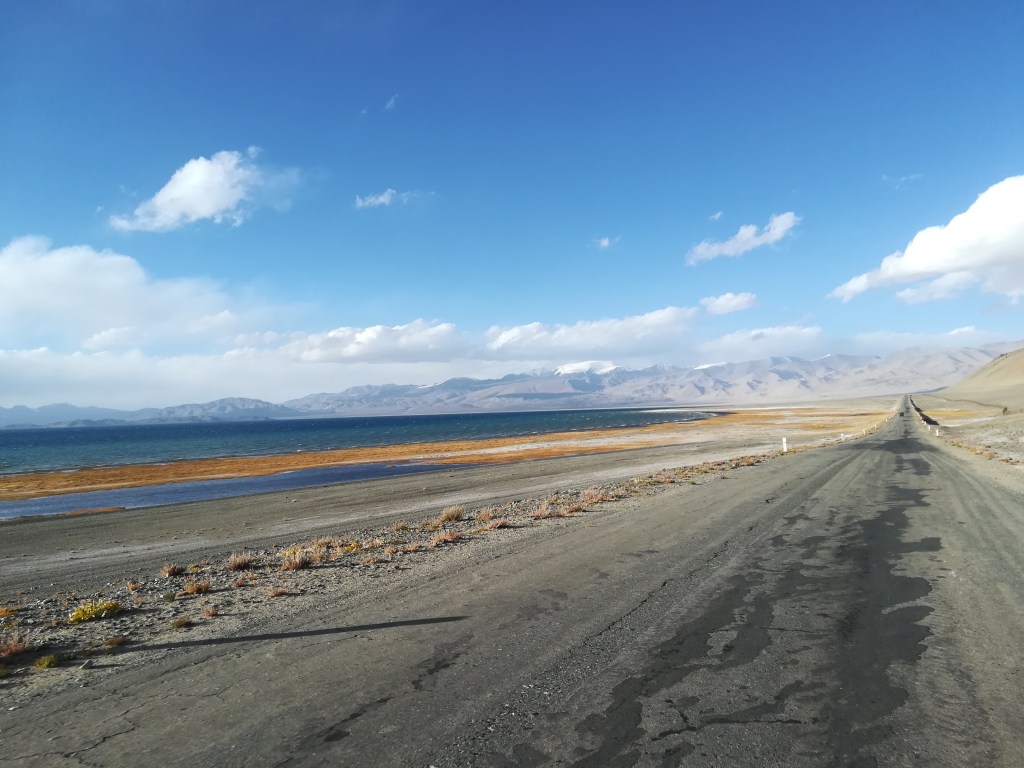
Nice tarmac leading to Karakul

It’s past 10pm when I see the first lights. I’m soon knocking at the door of a guesthouse. I get no answer. I feel the anguish growing inside me. I ride some more and spot another one. A young woman opens the door. She looks surprised to see someone outside this late. Yes she has a room for me. I enter the house. She takes me to what seems to be a kitchen with a couple beds in it. There’s also a stove where a fire is burning. I’m beside myself with joy. Then she asks me if I want food. With four walls, a roof and a fire, I thought I was the happiest man alive. I was wrong. Bread, potatoes, mutton and a whole pot of tea helped me reach an even higher level of happiness. There was no shower but I couldn’t care less. I already had so much. 

It’s corny, and it’s gonna sound cliché but I’m gonna say it anyway: no night spent in the most expensive five star hotel in Paris can even come close to what I experienced that night. The combination of a long hard day in the saddle with no breaks, the hours spent riding in the cold darkness, and then the doubt, the not knowing how this day would end. These three things put together made the reward something beyond special. 

You need to freeze for hours and wonder if it’s gonna stop to know how blissful a cup of hot tea in front of the fire can be. So yeah, maybe it is the getting there that holds the key to what makes bike touring the best thing one can do on this planet.

The essence of bike touring

It’s been ten years and more or less 100.000 km. So maybe it’s time to tell the stories of my travels. Before I got into cycling, I had no stories, now I have too many. 

I’m sure it’s true that a lot of people have ridden further, seen more places and have been on the bike for way longer. But I haven’t met many people that have the same approach to bike touring that I do, that are driven by the same motives. Hopefully this approach might help me tell different stories and shed some light on other aspects of riding bikes. 

How many people ride overnight to see what it’s like? Not many I guess. What would be the point anyway? Wouldn’t it defeat the purpose of bike touring which, I think for many, is simply to get there? Isn’t the moment when you finally get off the bike after a long day, the one that holds the key? Maybe. 

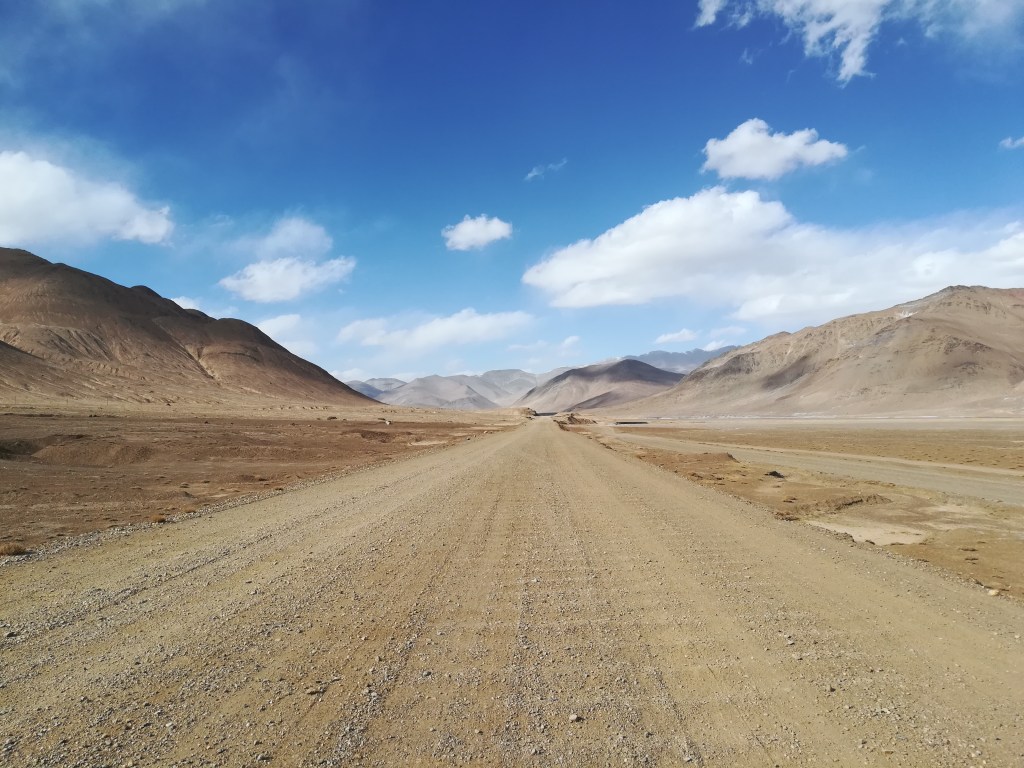
Pamir Highway, Tajikistan

It is indeed the moment when we collect the rewards. It is that time when a hot shower feels heavenly, any food tastes delicious and the comfort of a bed is enough to put a big smile on our face. It is a very basic principle that pretty much everyone is familiar with: the harder you work for it, the more you think you deserve it, the better it feels. 

A bit more than a year ago, somewhere in Colombia, I rode my bike for a day of mostly paved downhills. A bit before dusk I got to a small town where I had planned to stay. I sat down to eat an early dinner and look at my lodging options. I found a few good places but couldn’t convince myself to book one. Something felt wrong. Stopping now seemed weird for some reason. It took me some time to figure it out, but the reason was: it all had been too easy. I missed the hardship of my usual rides; the bad roads, the endless climbs, the descent in freezing temperatures. I felt like it was not time to stop as the rest I was about to get was not one I had earned. 

Punta Olimpica, Peru (Gavin Kaps©)

So, I got back on my bike as the night had settled, and rode another 25 km. Half of it on tarmac and the other half on a hellish gravel road, through the thick, hot and humid air typical of these equatorial latitudes. It took much longer than I anticipated and I hated it. But, in a way, this was exactly what I had been looking for without even knowing it. When I got to the next town, stopping seemed right. I looked for a hotel, found a decent one and then went out for a second dinner.

It seems ironic to say that the essence of bike touring might actually reside in being stationary. It might not be 100% accurate, as the passion for touring is a fairly complex one. Yet I feel there’s some truth to it. What are some of my fondest memories of ten years of cycling the world? I can cite two. Two journeys that are deeply engraved in my memory and will be as long as I am alive. Two rides that are the story of a hardship and how the way they ended immediately justified them. And these two ride will be the subjectw of my next posts. So stay tuned.